

DUBBING AND VOICE / NICKE STUDIO GUIDES
Spanish dubbing localization: natural dialogue comes first
Understand Spanish dubbing localization through adaptation, cultural context and human performance. Build a brief for natural Latin American dialogue.
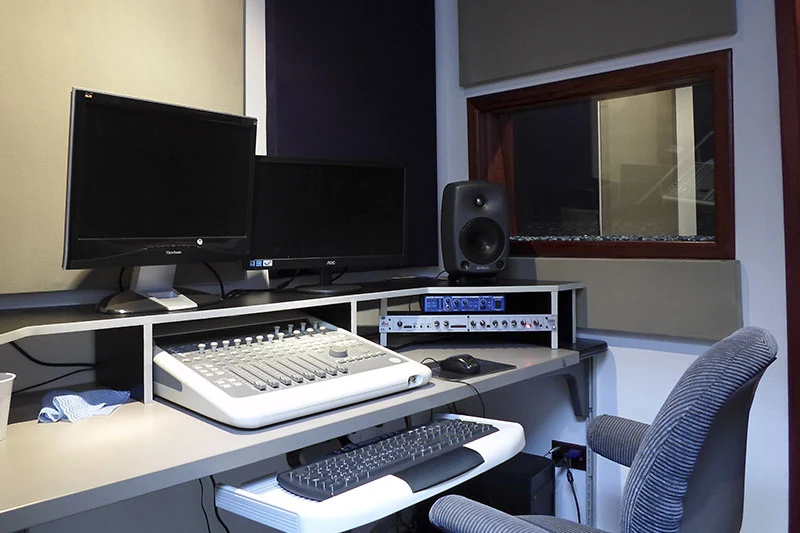
Spanish dubbing localization adapts a production so its dialogue works for a Spanish-speaking audience in context. Translation is part of that work, alongside character voice, cultural meaning, performance and timing. A correct sentence on the page may still be difficult to say or unconvincing in a scene.
Human voices are important because the final dialogue needs to be acted. An adapter can create a workable line, an actor can test its spoken rhythm and a director can judge whether it preserves the dramatic action. That collaboration is a central part of natural-sounding localization.
Define the audience before adapting the dialogue
Spanish-speaking audiences do not form one uniform market. A project may need a broadly understandable Latin American version or a version directed at a particular territory. Establish that choice before debating individual words.
Neutral Latin American Spanish is a production approach intended to reduce strongly local vocabulary and pronunciation where appropriate. It does not mean stripping characters of personality or assuming every viewer shares the same cultural references. The creative brief still needs to define tone, register and audience.
Ask which linguistic choices are essential to the story. A character's social background, age or deliberate formality may matter. Avoid changing those characteristics simply to make every line sound generic.
Translate the intention, then shape the line
Begin by understanding what the line does in the scene. Does it persuade, threaten, interrupt, joke or withhold information? Then find a natural expression in the target language that preserves that action.
Literal translation can preserve words while altering a relationship. A phrase that sounds casual in the source may sound unusually formal in Spanish. An idiom may need a different construction so the actor can deliver the same intention without explaining the expression.
| Adaptation concern | A useful question | Review method |
|---|---|---|
| Meaning | What information must remain? | Compare with the full source scene |
| Register | How does this character speak to this person? | Read the exchange aloud |
| Cultural reference | Will the audience understand the function of the reference? | Review options with a language specialist |
| Timing | Can the thought fit without rushing? | Test against picture at normal speed |
| Character continuity | Does the choice remain consistent later? | Maintain a shared terminology and character guide |
Natural language and sync need to work together
Lip-sync dubbing introduces constraints around duration, visible articulation and the start and end of speech. Those constraints require judgment. A line that technically fits but sounds forced can weaken the scene; a beautifully written line that cannot be performed in the available space also needs revision.
Test the wording aloud early. Check whether the actor has enough space to express the thought, rather than counting syllables as if every syllable takes the same time. Pauses, stress and physical action affect how a sentence plays.
The Netflix film and series dubbing guidelines discuss adaptation, casting and performance as connected creative work. Use platform specifications relevant to your own delivery; one distributor's guidance is not automatically the specification for every project.
AI translation does not finish the adaptation
An automated draft may help a team inspect meaning or prepare an early version. It still needs review for spoken language, character consistency, cultural references and the actual picture. A fluent text output does not establish that a line can be acted naturally in the available time.
Similarly, generating a Spanish voice track does not by itself resolve adaptation decisions. Someone must decide whether the language, performance and timing belong to the production. A human-first approach keeps those creative responsibilities visible.
For the performance side, read emotional voice acting. For a complete workflow comparison, see human voice vs AI voice.
Build a shared language and character guide
Keep approved names, pronunciations, recurring terminology and character notes in a place the adapter, director and actors can use. Record the reason for important choices so later episodes do not reopen the same decision without context.
- Identify names and terms that must stay consistent.
- Note relationships that affect formality and address.
- Document recurring jokes or references and their chosen treatment.
- Track approved changes made during recording.
- Verify that later script versions include those changes.
A short, maintained guide is more useful than a large document that no longer matches the recorded dialogue. Assign someone to update it when a decision changes.
Review a complete exchange
Consider an invented scene where a character politely refuses an invitation while trying to avoid suspicion. A literal translation may communicate refusal but lose the attempt to remain friendly. The adapter and actor need a line that preserves both actions and fits the visible response.
This example illustrates an adaptation problem, not a claim about a particular project. Its practical lesson is to review the exchange rather than approving sentences independently. Meaning often depends on what the next person hears and how they respond.
Natural dialogue should sound as if the character has a reason to say it in Spanish, not as if the actor is navigating a translation exercise.
What to include in a Spanish dubbing brief
Provide the target audience, source video, available scripts, pronunciation references and intended delivery format. Explain whether the project needs lip-sync, voice-over treatment or another approach. Identify who can approve adaptation and casting changes.
Ask for a representative scene before committing the full production. Review naturalness, character identity, timing and intelligibility. Include any difficult terminology or cultural reference in the test, rather than selecting only the easiest dialogue.
Does neutral Spanish remove all regional identity?
It should not automatically remove character. Decide which regional markers are distracting for the intended audience and which are meaningful to the story.
Can AI create a usable first draft?
It may, depending on the material and system. Evaluate it as a draft and retain qualified adaptation and creative review before recording or final delivery.
Who approves changes during recording?
Define that responsibility in advance. The director, adapter and production owner need a clear route for resolving changes without losing version control.
Discuss a natural Spanish dub
Backstage Studios LA lists LATAM Spanish dubbing among its services. Share your audience, runtime and scene references with the studio to discuss adaptation and human performance.