

NICKE STUDIO / AI and advertising production
AI Generative: Higgsfield or a real production for your ad? · Nordics
AI Generative: compare Higgsfield, live-action and hybrid ad production by finished cost, quality, trust and creative control. Nordics.
Read in another language ↗
Should you pay for Higgsfield or hire someone to make an advertising spot? Start with what the ad must demonstrate. AI Generative, meaning generative artificial intelligence applied to advertising, opens up visual ideas and imagined scenes. A professional turns a commercial intention into a clear, reviewable piece that represents the product correctly. That professional can use AI too.
My approach at Nicke Studio draws on editing, sound and visual judgment: choose the method after understanding the brief. This is a decision framework, without claims about campaign results I have not measured. The linked product information and terms were checked on 29 October 2026.
A subscription and a professional deliver different things
Higgsfield provides access to tools. Hiring a creator, editor or production company lets you commission work, deliverables and accountability. One person with a camera can handle a straightforward ad; another brief might need performers, lighting, direction and post-production. Scope determines the budget.
The platform's tool selection guide distinguishes Marketing Studio, Cinema Studio and other workflows. The useful question is who will write the message, select the shots and approve the final edit. Our creative services and work help make that scope concrete before choosing software.
Nicke Studio editorial principle: buying a tool creates possibilities; producing an advertisement requires decisions.
What the person directing your ad contributes
A professional should turn an offer into a short story: what to show first, which objection to address and how to finish with a clear action. They may notice missing reference photographs, a confusing demonstration or an effect that distracts from the benefit. These decisions matter behind a camera and behind a generator.
Ask for a proposal explaining the concept, audience and editing approach. Agreeing who handles changes prevents the client from unexpectedly becoming writer, director and supervisor. When hiring someone who uses AI, assess their selection and finishing skills: striking images still need a coherent message to become an advertisement. A useful portfolio shows how individual shots support that message, rather than relying entirely on spectacle.
When to choose Higgsfield and when to film
According to the Marketing Studio documentation, you can start with templates, images or a product link. Some formats produce images; others produce video. Cinema Studio offers camera, lighting and reference controls that differ between versions. These are vendor capabilities, rather than an independent quality test.
| What the ad needs | Higgsfield with human direction | Filmed production | Hybrid approach |
|---|---|---|---|
| Concept exploration | Supports visual variations | Sketches and camera tests | Previsualise before filming |
| Exact product operation | Every detail needs checking | Records the product working | Film the demonstration; generate transitions |
| Customer testimony | An avatar cannot verify an experience | Captures an authentic statement | Keep the real voice and testimony |
| An imaginary setting | Useful when fiction is appropriate | May need sets or visual effects | Combine filmed assets and backgrounds |
| Multiple adaptations | Can support creative exploration | Footage supports alternative edits | Reuse footage and create variants |

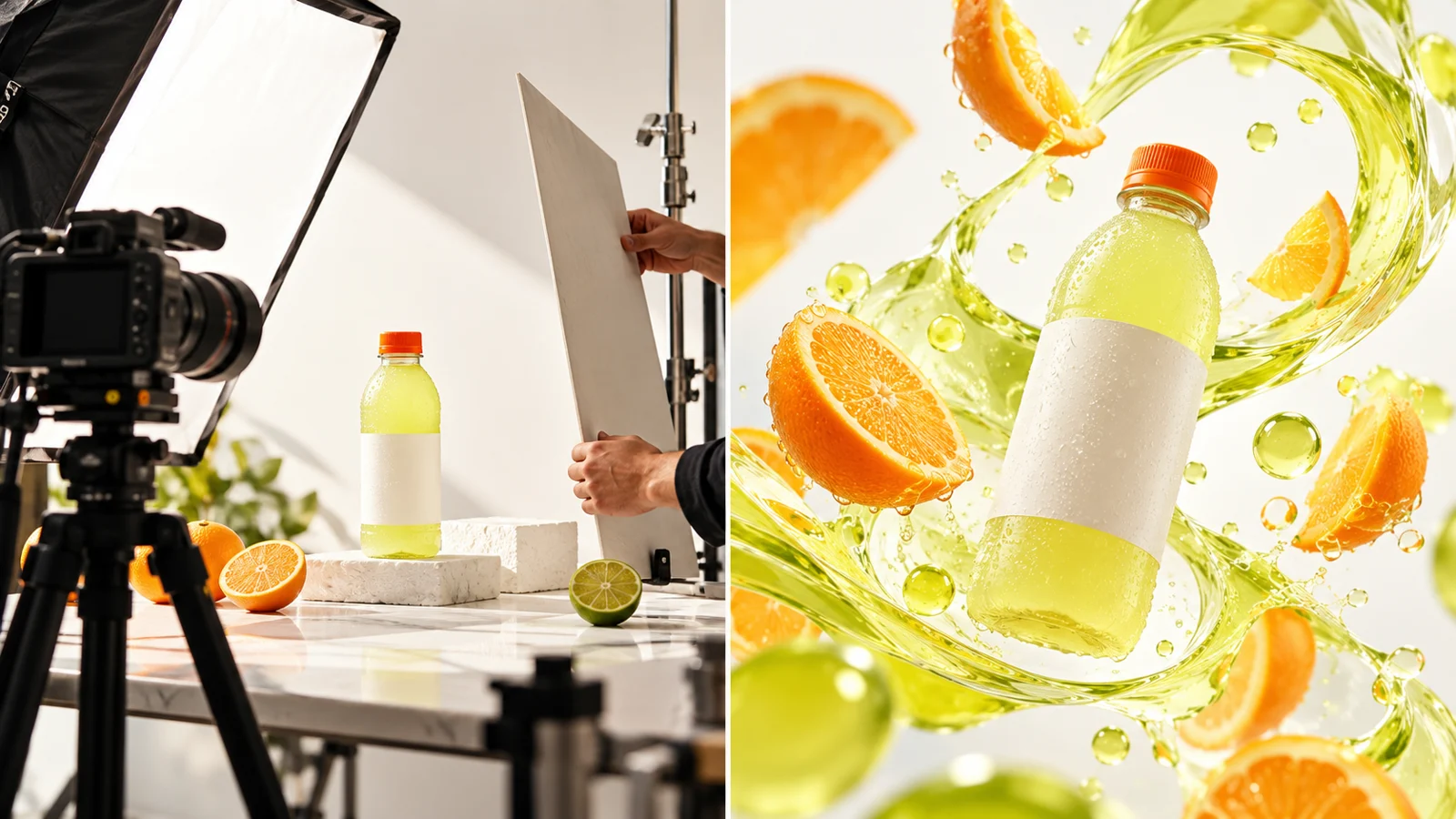
The generated comparisons here illustrate art-direction possibilities. Both sides are AI-generated images, not Higgsfield outputs or a test of its accuracy. A filmed production can also create fantastical scenes using visual effects. Neither look belongs exclusively to one method, and a still image cannot demonstrate video continuity or performance.
Budget for the approved deliverable
A subscription covers only part of the job. Higgsfield explains that credits depend on model, duration and resolution; regenerating and upscaling can also consume them. Check current pricing, billing periods and the conditions shown before purchasing.
| Budget item | AI-assisted production | Filmed production |
|---|---|---|
| Preparation | Script, references and tests | Script, location and shooting plan |
| Obtaining footage | Credits, attempts and selection | People, equipment, product and travel |
| Finishing | Editing, corrections, voice and music | Editing, colour, sound and required effects |
| Changes | Regeneration and another edit | Reuse takes or agree additional filming |
| Approval | Product accuracy and consistency review | Performance and message review |
Compare equal durations, formats, revisions and usage rights. Six planned shots with four attempts budgeted for each means 24 generations: a planning example, rather than an observed success rate. Include labour hours and divide total expenditure by approved deliverables. Recording rejected attempts helps explain where the actual production time went.
Include vertical and horizontal versions, subtitles and a mix that makes speech intelligible on a phone. Specify delivery dates and revision limits. An apparently inexpensive option can cost more when finishing is missing; a filmed proposal can supply several useful pieces when reusable footage is planned from the beginning.
Product accuracy, performance and trust
An AI Generative asset can look convincing while misrepresenting a label or mechanism. Review logos, proportions, hands, continuity and lip sync. The vendor acknowledges that UGC voiceover and pacing may vary, and changing a video can require another generation.
- Use generated visuals for metaphors, atmosphere and exploration where appropriate.
- Film when viewers need to see a real facility, process or product.
- Preserve the identity and words of an authentic testimonial contributor.
- Review filmed work too: real footage can have poor sound, unclear information or exaggerated claims.
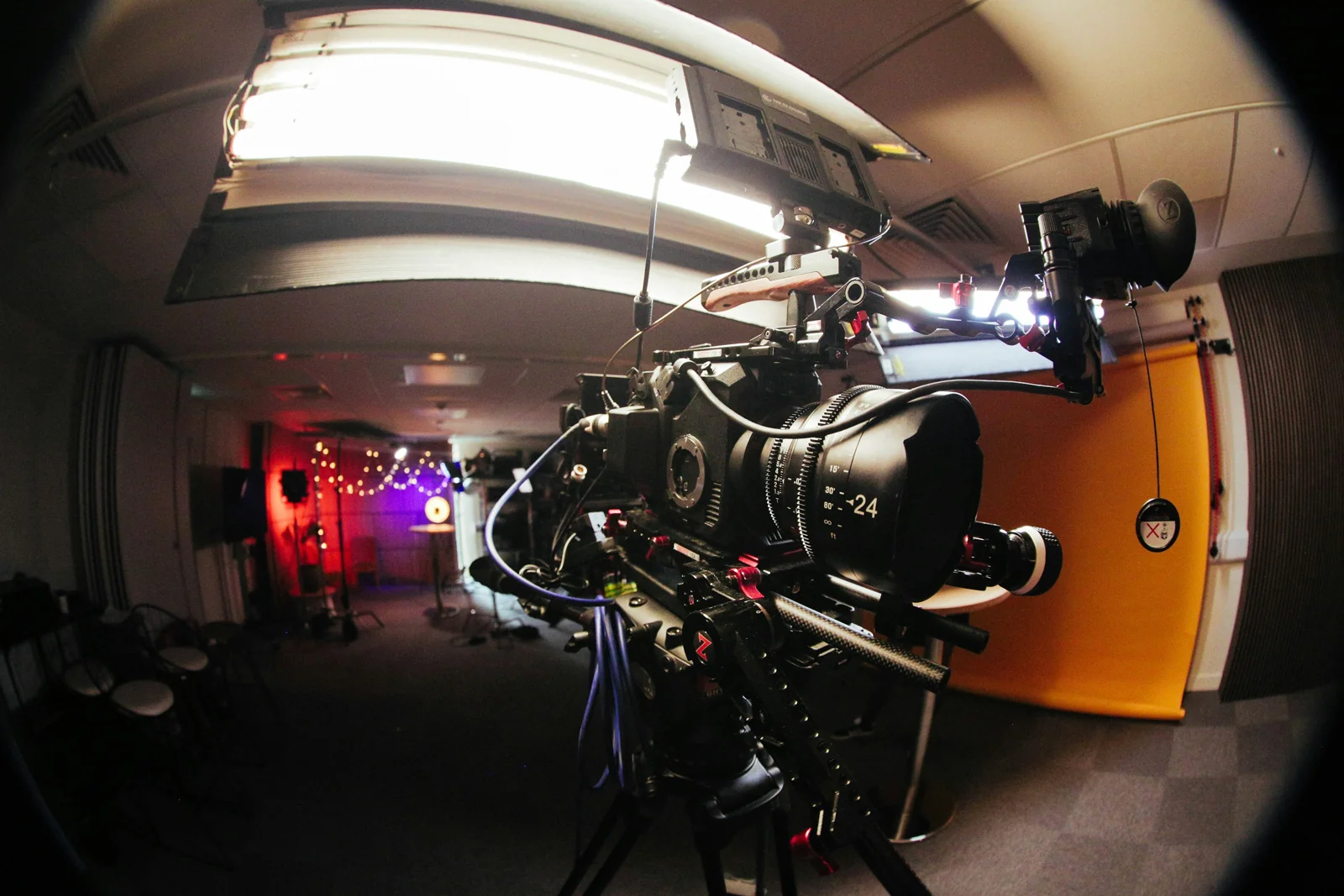
A homemade video aesthetic does not establish actual product experience. Trust depends on what you claim and can support, alongside visual polish. That human review connects with our discussion of AI and critical thinking.
Give the hybrid option its own scope
For a shop, workshop or service, I would first film what must be accurate: product, team, space and demonstration. Then I would consider illustrative backgrounds, transitions or visual treatments. AI expands the art direction while the recorded material retains the evidence.
A brand could film a trainer's fastening and texture, then pair those details with a clearly conceptual imagined scene. I would test a representative shot before committing to the full piece. Our guides to Gemini, ChatGPT and automation help distinguish research, production and review. Naming who owns each stage also makes handovers and client feedback easier to manage.
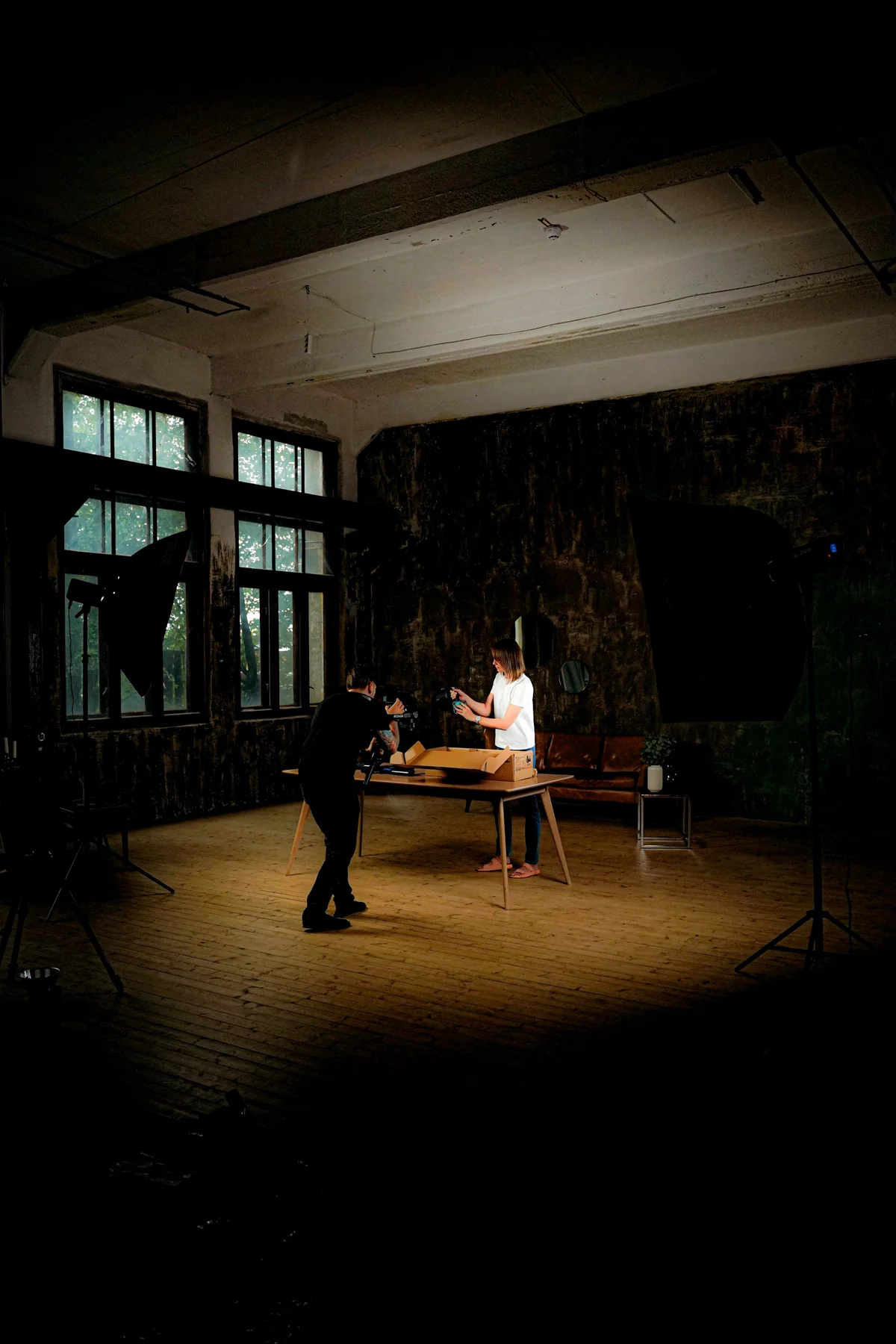
Nicke Studio editorial principle: generate what expands the idea and film what the advertisement needs to demonstrate.
Commercial use, likeness and client materials
Higgsfield states that all users may use outputs commercially. This does not guarantee exclusivity or replace permissions for faces, voices, brands or music. Read its current terms and agree which client references may be uploaded.
- Define likeness and voice permissions, media and usage duration.
- Clarify licences for music, photographs and included assets.
- Agree final files, formats, revisions and material retention.
- Identify synthetic scenes where appropriate and avoid fabricated testimonials.
These questions belong in choosing an AI Agency, alongside choosing a generator.
A Nordic campaign needs more than one regional label
Specify which Nordic markets the campaign will reach and which languages each version needs. Do not assume an English master or a single accent solves the brief for every audience. Agree pronunciation, subtitle timing, offer details and who will review each version. A central edit can combine real product footage with illustrative generated scenes, while local voices and final cards receive separate approval. Price these adaptations explicitly, rather than counting several generated clips as finished local campaigns simply because the scenery looks plausible.
A useful pilot before the complete ad
- Define the audience, offer, message and one concrete deliverable.
- Choose a scene representing the brief's real difficulties.
- Request comparable proposals for directed AI, filming and hybrid production.
- Record attempts, hours, corrections and accepted details.
- For a published test, keep audience, offer and destination comparable; measure enquiries or sales alongside creative costs.
Nothing here establishes that either method always converts better. I would choose Higgsfield to explore and build synthetic scenes suited to the message, commission filming for people and details that must be authentic, and combine them where both add value. You can discuss your project or continue through the blog.